Dental patient communication has moved well beyond appointment reminders. Large practices and hospital-based dental teams…
Patient-Centered Care Examples That Improve Outcomes and Satisfaction
Healthcare is changing because patients are changing. They’re no longer satisfied with being numbers in a system. They expect care that sees them as individuals with unique goals and daily realities.
Patient-centered care answers that call by shifting the focus from the disease to the patient. This mindset is more than just showing empathy. It’s lowering readmissions, improving adherence, and spiking satisfaction scores.
In this blog, we’ll explore real examples of how organizations are turning that philosophy into everyday practice.
The Need for Patient-Centered Care in Modern Healthcare
Patients today approach healthcare very differently than they did ten years ago. Most of them walk into appointments already having Googled their symptoms and compared treatment options online. So when a provider tells them what to do without asking for input, it doesn’t sit well.
Patient-centered care is changing that approach by making care plans fit patients’ routines and preferences. The old model, where doctors talked and patients listened, is giving way to real collaboration.
Value-based care is pushing this shift further, tying incentives directly to patient outcomes. That means communication, prevention, and personalization matter more than ever, and it’s changing how doctors and patients work together.
Also, patient-centered care factors in daily realities like financial strain, family responsibilities, job stress, and emotional health. They all shape how well someone can follow a treatment plan. Acknowledging these factors leads to more effective treatment.
Patient-Centered Care Examples That Are Transforming Healthcare
Below are some notable examples that show how organizations are addressing specific patient needs through better communication, personalized treatment, and smart use of digital tools.
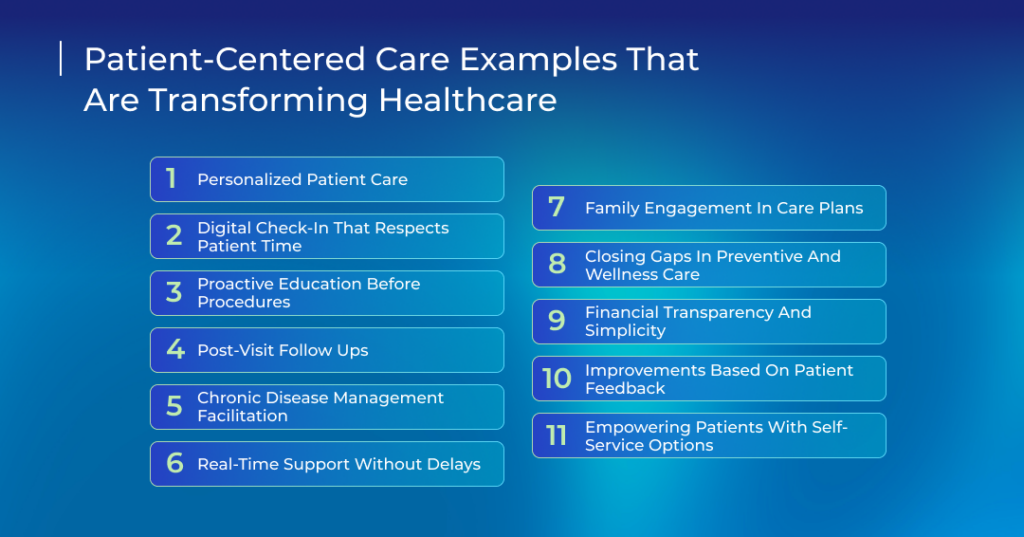
1. Personalized Patient Care
No two patients live the same life, so their care plans shouldn’t look the same either. Providers are moving beyond generic treatment templates to care models that adapt to how patients actually live.
Think of the night-shift worker who can’t follow a 9-to-5 medication schedule, or the frequent traveler who relies on virtual check-ins to stay on track.
Such tailored plans ensure patients stick to their treatments and show far better results compared to forcing everyone to follow the same cookie-cutter plan.
2. Digital Check-In That Respects Patient Time
Patients are completing their pre-visit paperwork before arriving at the clinic. They upload their insurance details and complete medical forms from their homes. This saves them from waiting in a crowded waiting room.
Previsit digital check-ins are especially helpful for patients with busy schedules. They appreciate the speed and convenience, while the provider improves data accuracy by reducing manual entry errors.
3. Proactive Education Before Procedures
Sending information ahead of time makes a difference. Someone scheduled for surgery can get materials explaining what recovery looks like and how pain management works.
They show up knowing what questions to ask instead of feeling blindsided. They understand why they can’t eat after midnight or which medications to skip. This preparation cuts down on cancellations and helps patients feel less scared going in.
4. Post-Visit Follow Ups
Consistent follow-ups are also redefining the healthcare sector. Providers are using automated outreach to check up on patients instead of forgetting them the moment they leave the clinic. A simple text to ask if they understood their treatment plans or if they are having any side effects makes a huge difference in reducing readmissions.
5. Chronic Disease Management Facilitation
Digital outreach helps patients manage long-term conditions like diabetes or heart disease more effectively. They receive educational content and wellness tips to learn to recognize warning signs.
Providers also keep tabs on them through timely follow-ups or sending reminders for appointments. The consistent messaging makes patients feel less isolated in managing their chronic issues.
6. Real-Time Support Without Delays
Timing makes all the difference in patient-centered care. Secure messaging gives patients a way to reach their care team without phone tag. Someone texts a question about adjusting their dosage and gets an answer in a few hours instead of waiting days for a callback. Online booking systems save patients from waiting on hold.
This immediate access stops small concerns from turning into emergencies. It’s particularly useful for people with unpredictable work schedules who can’t easily make phone calls during office hours.
7. Family Engagement in Care Plans
Including family members through shared appointment notifications and care updates supports better decisions. Elderly patients with chronic conditions benefit when adult children receive medication reminders and test result updates. For someone with dementia, involving their family members ensures the plan is doable at home.
Shared access to care information helps families coordinate support and recognize when professional help is needed.
8. Closing Gaps in Preventive and Wellness Care
Automated reminders keep people on track with screenings and checkups they’d otherwise forget. A text reminds someone their mammogram is overdue and offers easy scheduling. During visits, the system flags missed vaccines or physicals.
These nudges help busy people prioritize prevention. Catching issues early through consistent screening beats dealing with advanced disease later, both for health and costs.
9. Financial Transparency and Simplicity
Medical bills create stress. They often result in negative patient experiences, which, until then, was a positive one. Providers are addressing that problem with digital billing systems that give patients upfront cost estimates.
This way, they have a fair idea of what they’ll actually pay before agreeing to a procedure. The staff is also trained to discuss costs before treatment rather than after. This prevents surprise bills and helps build trust.
Additionally, simple payment portals that accept credit cards, payment plans, and flexible options further help improve satisfaction.
10. Improvements Based on Patient Feedback
Patient-centric care means giving them a voice. Their feedback is important to improving your healthcare operations. Running surveys at various touchpoints, such as immediately after a visit, shows you what’s working and what isn’t. The collection of regular feedback and then acting on it also shows patients that their input means something. This improves loyalty, convincing patients to stay with their providers.
11. Empowering Patients With Self-Service Options
The patients of today prefer finding solutions themselves. Self-service portals allow them to do just that. They can book appointments, download test results, request refills, and do other tasks without calling anyone. They can also message their doctors to ask about potential new symptoms or drug side effects. This reduces your front desk’s call volume while also empowering patients to engage in their own care.
How to Foster a Patient-Centric Approach as a Healthcare Provider
Putting patients first means changing how your team communicates, how you gather feedback, and what tools you use. Start with these steps:
Better communication makes a big difference. Train your staff to listen and interact with patients. They should stop interrupting them and give them room to fully explain their health conditions. These are the foundations of excellent patient-provider communication. This is how you make patients comfortable and trust your staff to openly share their questions and symptoms.
Ask patients for their feedback. It’s a regular source of data that helps you understand your patients’ experiences. CAHPS surveys are built for this, showing why it’s important for providers to work with patients when designing care plans for them.
Use digital tools to make coordination easier. They connect different systems so that patient data can be actually used to improve communication, access to care, and engagement. Self-service portals and telehealth platforms are prime examples here.
Change your workplace culture. This means shifting your team’s focus from diseases to patients. Your leadership plays a key role here. They must model patient-centered behaviors themselves to lead by example. They must also ensure their staff have the time and support to build real relationships with patients.
How TeleVox Helps Providers With Patient-Centered Care
Patients remember how they were treated long after the appointment ends. It’s often the experience, not the diagnosis, that discourages them from taking their health seriously. Chasing updates, repeating the same information, and never knowing what comes next erodes trust and motivation.
Now imagine if that confusion disappeared.
Televox’s suite of solutions makes that kind of healthcare experience practical. Our platform helps you simplify communication at scale, so your patients feel genuinely supported and cared for at every step.
We bring together everything you need — from Engage our speech-to-speech AI-powered Agent to automated reminders, eCheck-ins, live chat, surveys, and digital care programs — all working together to create smoother, more connected patient experiences.
Engage acts like a virtual team member, handling your front desk’s daily workloads. Meanwhile, our automated reminders, digital intake tools, and live chat keep patients informed, prepared, and engaged throughout their care journey.
What sets Televox apart is how seamlessly we connect every part of the patient journey. We create a continuous loop of communication that feels personal, proactive, and human. Your patients stay informed and involved, and you can scale that experience without losing quality.
If you’re ready to make patient-centered care more than a goal on paper, we’re here to help you make it real. Schedule a demo and see how we can transform your patient experience together.
Related Posts