A patient engagement platform is a digital hub that makes it easier for patients to…
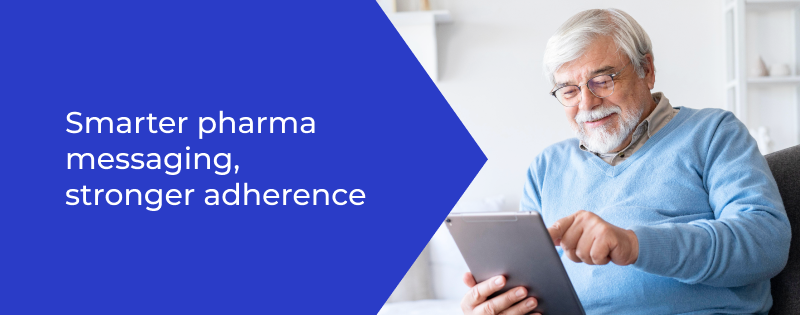
The Strategic Use of Pharma Patient Messaging for Engagement and Adherence
Patient messaging plays a growing role in how pharmaceutical companies support patients after a prescription is written. As care moves across more digital touchpoints, messaging helps guide patients through treatment, reinforce adherence, and step in when support is most needed. When used strategically, patient messaging becomes a practical way to drive engagement and improve outcomes.
The Communication Gap Between Pharmacies and Patients
The traditional manner in which pharmacies communicate is prone to creating friction points. Your emails likely end up in spam and leaving voicemails means there’s a good chance they’ll be deleted without listening. In-person visits might seem a better option but patients often miss them or rush through.
Most pharma interactions with patients happen like this: someone fills a prescription on Monday. The pharmacy sends an email on Tuesday. The patient checks their inbox on Friday and misses the window for questions. By the time they remember, their concern has grown into confusion about dosage, timing, or side effects.
Phone calls create similar problems. A pharmacist calls during work hours. The patient sees a missed call later but doesn’t recognize the number. They don’t call back. Days pass. The prescription sits unfilled or medication questions go unanswered.
These delays matter. Patients need immediate answers about drug interactions, proper storage, and warning signs. It’s why communication lags have a direct impact on adherence drops. Patients skip doses, stop treatments early, or take medications incorrectly.
Practical Use Cases for Engaging Patients Through Messaging
Messaging platforms make patient outreach feel like a real conversation instead of another task. When done right, it supports care, improves follow-through, and keeps patients informed at every step.
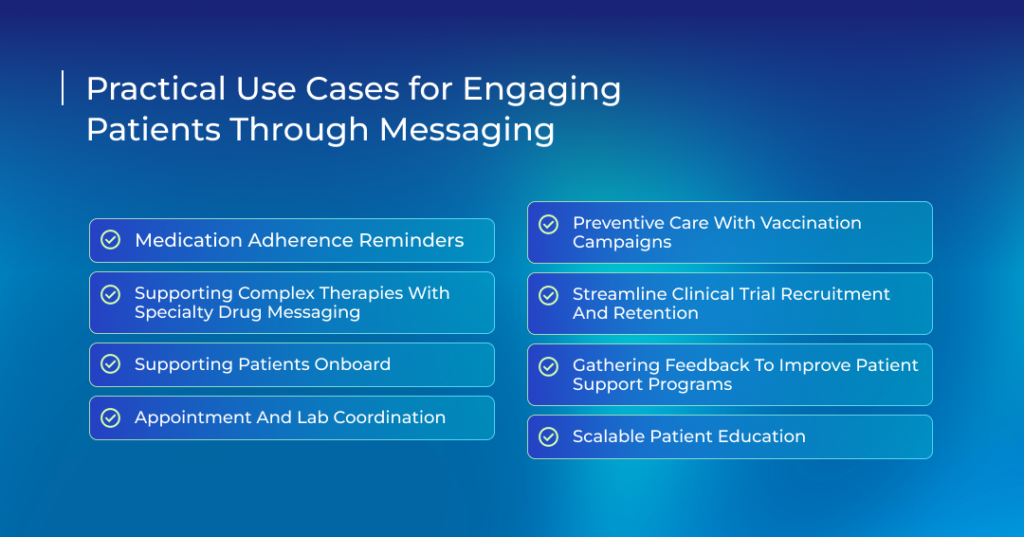
Medication Adherence Reminders
Pharma patient messaging helps patients stay on their medications. A simple text message delivered a few days before a dose is due works wonders in improving adherence rates without adding extra work for your staff.
Emails work better for longer messages where you explain the benefits of on-time medication to convince patients to stick to their schedule.
Traditional phone calls are effective as well, especially in the case of patients who are at risk of falling off track.
For pharmacies, automated patient messaging removes the daily burden of keeping track of hundreds of patients.
Supporting Complex Therapies With Specialty Drug Messaging
Biologics and oncology treatments require a lot more support. Sending targeted reminders about lab work, infusion appointments, and refill timelines helps patients keep connected to their care team throughout the journey. Two-way messaging further helps patients clear their concerns by asking routine questions.
Supporting Patients Onboard
Starting a new medication can sometimes be overwhelming. They probably have many questions and concerns. Welcome messages, along with short videos and FAQs, help them to learn what to expect right from the very first dose. Messages arrive in stages, so patients are not overloaded on day one.
Appointment and Lab Coordination
Many therapies depend on follow-up visits and monitoring. Pharma patient messaging supports coordination through appointment reminders and lab notifications. Messages can include calendar links or scheduling prompts that direct patients to approved booking tools. This keeps communication focused on upcoming requirements.
Preventive Care With Vaccination Campaigns
The right timing and targeting determine success rates for vaccination programs. Messaging tools are a great help here for pharmacies to engage patients on a large scale. Automated systems further remove the administrative burden by segmenting the population based on age, location, or risk to improve outreach. This means you can contact hundreds of patients simultaneously to improve participation rates.
Streamline Clinical Trial Recruitment and Retention
Clinical trials require constant communication to increase recruitment rates. You reach out through targeted texts and emails. The ongoing messaging keeps reminding participants about upcoming visit dates and required check-ins.
Note that live chat support is a key engagement channel for clinical trials. You see fewer patients drop out when they can easily have their questions answered by your live agents.
Gathering Feedback to Improve Patient Support Programs
Feedback helps you understand where patients are struggling but pushing them manually in large volumes is a tall ask for your team. Messaging tools automate the process for everyone’s benefit. They send short surveys to patients on their own through SMS or email at specific touchpoints, such as after onboarding or refill pick-ups.
Patients can then share their feedback on their phones at their own convenience, and you get to use that data to spot friction points.
Scalable Patient Education
Patient messaging systems allow pharmacies to send educational content to thousands of patients simultaneously. You don’t have to hire additional staff as your information scales. The messaging platform does that for you, meaning you keep your patients consistently engaged about their conditions even as you reach peak seasons.
Top Messaging Channels Used in Pharma Patient Communication
Pharmaceutical companies use five primary channels to reach patients throughout their treatment journey.
SMS Text Messaging
SMS delivers the highest engagement rates. Messages arrive on the phones patients carry everywhere. Their open rates reach 98% compared to email’s 20%. Patients also read texts within minutes of receiving them.
The format suits brief, time-sensitive information. A text saying “Your prescription is ready for pickup” requires no lengthy explanation.
RCS (Rich Communication Services)
RCS adds features that SMS lacks. It supports images, buttons, and branded sender information. Patients see the pharmacy name instead of a phone number. They can tap buttons to confirm appointments rather than typing responses.
The richer format makes complex information easier to absorb. RCS also provides read receipts so pharmacies know when patients view messages. This data helps them follow up appropriately.
Email handles detailed information that doesn’t fit in text messages. Lab results, insurance documentation, and medication guides go through email. Patients can save these documents and reference them later.
Pharma patient messaging through email works best for scheduled newsletters, policy updates, and educational content. The format allows for formatting, attachments, and longer explanations.
Voice Calls
Voice calls work for elderly populations or rural areas with limited internet connectivity. They deliver reminders about medications that require regular monitoring.
This includes voice messages so patients who miss the call can listen later. The format suits instructions that benefit from verbal explanation.
Chat/Web Messaging
Chat widgets on pharmacy websites let patients start conversations from their browsers. They can ask questions while researching medications or checking prescription status.
This channel catches patients at the moment they need information. Someone checking if a medication interacts with alcohol can get an immediate answer rather than waiting for business hours.
Benefits of an Effective Messaging Program in Pharma
A strong pharma messaging program supports patients throughout their treatment journey. Timely communication improves outcomes and helps build trust between pharma companies and patients.
Improved Adherence and Clinical Outcomes
Pharmacies can’t expect all their patients to take their meds on time. Most of them forget. Others might be taking the wrong doses. Sending them consistent reminders lowers their risk of falling off schedule. These reminders, along with educational content, work together to improve adherence rates.
Better Patient Engagement and Brand Trust
Proactive and relevant communication fosters familiarity and trust. Pharma patient messaging keeps patients informed without relying on inbound calls. Each message reinforces clarity around therapy expectations and available support. This brings patients closer to their treatment and the company behind it.
Closure of Care Gaps
Missed screenings and follow-ups are common. Pharmaceutical patient messaging focuses on pending tasks rather than repeating past instructions. This means sending reminders and scheduling links to ensure patients can complete their care plans without delays.
Reduced Drop-Off and Abandonment
Patients abandon care when the next steps feel unclear. The goal of patient messaging is to maintain contact during high-risk moments such as onboarding, refill delays, or therapy changes. This requires a targeted approach. Pharmacies identify patients who often miss appointments or refills and reach out at the right time to keep patients moving forward.
Pharma Messaging Best Practices for Better Engagement
Effective patient messaging requires more than choosing the right channel. Pharma teams need specific practices that improve response rates and keep patients engaged throughout treatment.
- Send messages when patients are most likely to respond, rather than at times convenient for the pharmacy.
- Add personalization to the messages with the name, drug name, and dosage information of the patients.
- Make sure your messages are short. Messages that are too long might as well be done via email. In-depth communications might very well be done via calls.
- Reminders for refills should be sent periodically before the actual pick-up date.
- Ensure your learning content is relevant to patients. Don’t send all learning content to all students.
- Track which messages patients open and respond to, then adjust timing and content accordingly.
- Keep compliance documentation for all patient communications per HIPAA requirements.
- Include pharmacy contact information in every automated message.
- Monitor delivery rates and adjust for messages that consistently fail to reach patients.
Televox for Pharma: Better Engagement, Adherence, and Outcomes
Patients don’t disengage because they don’t care. They disengage when communication breaks down or shows up too late to help. Televox helps you stay present at the moments that influence adherence, confidence, and long-term outcomes.
We give you the tools to scale meaningful patient communication without losing control or compliance.
Engage, our conversational AI solution, automates two-way outreach across voice, chat, and messaging, while still allowing patients to initiate conversations, ask questions, and self-serve at their convenience.
Insights360 adds visibility by turning every interaction into data you can act on, so you understand what’s working, where patients struggle, and how to improve follow-through over time.
If you’re looking to strengthen engagement and support adherence with intent, let’s talk. Schedule a demo to see how Televox can support your end-to-end patient messaging strategy.
Related Posts